
Topu Lyo:
quiet scenes from tokyo
Tracklist:
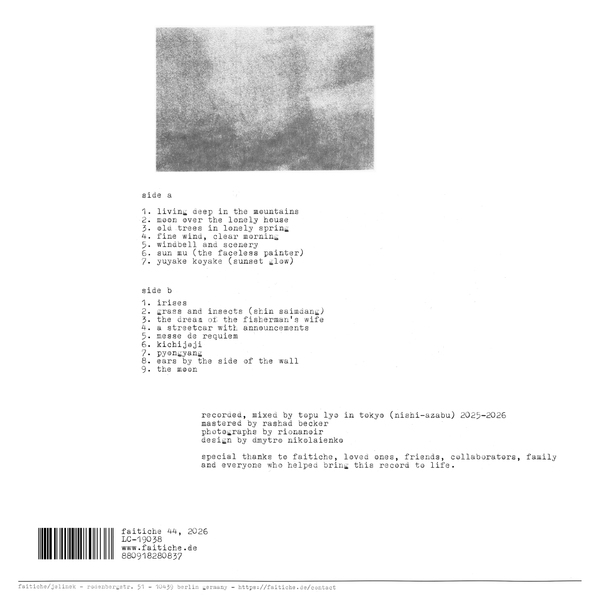
Side A:
1. living deep in the mountains (3:47)
2. moon over the lonely house (2:32)
3. old trees in lonely spring (1:59)
4. fine wind, clear morning (2:53)
5. windbell and scenery (1:38)
6. sun mu (the faceless painter) (1:41)
7. yuyake koyake (sunset glow) (1:38)
Side B:
1. irises (0:46)
2. grass and insects (shin saimdang) (1:04)
3. the dream of the fisherman's wife (2:24)
4. a street car with announcement (1:43)
5. messe de requiem (2:35)
6. kichijoji (2:15)
7. pyongyang (1:27)
8. ears by the side of the wall (1:47)
9. the moon (2:26)
Topu Lyo:
quiet scenes from tokyo
*** official release Nov 6th 2026 *** shipping starts November 6th 2026 ***
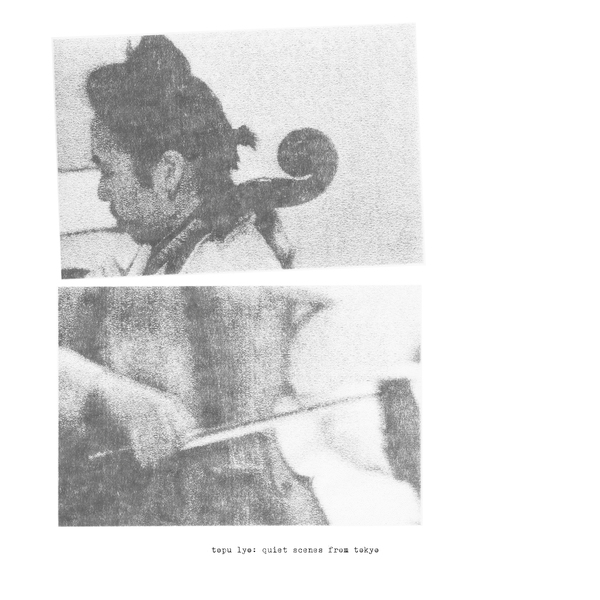
Faitiche is delighted to present the debut solo album by cellist, sound artist, and composer Topu Lyo: quiet scenes from tokyo brings together sixteen miniatures for solo cello and tape echo that oscillate between abstracts drones and rhythmic pizzicato sketches – all recorded at Topu’s Tokyo apartment. The constant traffic noise from a nearby highway has become an accompanying soundtrack for his compositions and can be heard on the recordings. Topu’s playing is marked by a distinctive idiom oriented more towards abstract electronic studio effects than classical technique.
The artist spoke to Jan Jelinek about his work:
JJ: A solo cello album may seem like an odd fit for a label that has to date released only music that is electronic in the broadest sense. But I think quiet scenes from tokyo complements the Faitiche repertoire exceptionally well. Its sixteen miniatures showcase the cello in all its complexity: the bowed passages sometimes recall a tape feedback drone; the pizzicato playing conjures up the percussion recordings of Moondog; and the abstract textures might be mistaken for the product of a granular sampler rather than rapid finger work on the cello. I’m constantly surprised by just how rich and varied this album is – without ever losing the charm of its sketch-like quality. Could you say a few words about the making of your album – first of all, from a rather technical perspective: what production tools did you use, and why?
TL: My production tools were very sparse. Just a solo cello and my Roland 301 Space Echo, which I only used at the end, running everything through it during mixing, tape only. After years of working with electronics, pedals, and synthesizers, moving to Tokyo pushed me toward minimizing my setup. But my aesthetics shifted too, toward simplicity. I wanted to strip everything back to just the acoustic cello and see how far I could push it — replicating some of my favorite electronic effects through extended technique: slow portamento, LFOs, filters, detune, noise. I’d also been listening to a cassette of ocean sounds for years. When I moved to Tokyo I was horrified to find myself living directly across from a freeway. Eventually the freeway started sounding almost identical to the ocean — and that ended up playing a prominent part in the recording.
JJ: That’s super interesting: mimicking electronic production as a compositional idea for the cello! You say the sound of the freeway is crucial to the album: I, too, tend to interpret steady traffic noise as a positive soundscape – do we hear the freeway on the album? I can also hear other field recordings, for example on a street car with announcements. Can you say a bit about how these field recordings influence your playing?
TL: Yes, you can hear the freeway on the album! The freeway is most prominent in old trees in lonely spring, yuyake koyake, and the moon (you can clearly hear individual cars). When I first began recording I had my balcony door shut tightly, but after a while I began leaning into the highway sound and slowly opening the door little by little to control the amount of noise. streetcar with announcements was a moment I was recording and a car passed by making announcements in the background. I loved how it sounded! Same thing with yuyake koyake, and later I realized that every day at 5pm the same song plays to mark sunset, telling children it’s time to go home. Having this bedrock of sound puts less pressure on me to put music on top or to play more notes.
JJ: It’s astonishing how much this differs from what I’d imagined: I’d been picturing peaceful landscape recordings, but had never thought of a freeway. Which goes to show how open to interpretation traffic noises are. So the room by the freeway had a major influence on the album – how are you going to perform it live?
TL: The contrast between the freeway and the beautiful landscape in my head couldn’t have been starker. I too was imagining a beautiful landscape in which to create the album, but somehow it still worked out. I've been going back and forth a lot on live shows and I think the most honest way is to have it the most stripped down. I was thinking of using traffic samples etc., but I think the duet really comes from the background sounds from every unique venue/environment. So as it stands, I’ll just be doing acoustic solo cello.
recorded, mixed by topu lyo in tokyo (nishi-azabu) 2025-2026
mastered by rashad becker
photographs by rionanoir
design by dmytro nikolaienko
special thanks to faitiche, loved ones, friends, collaborators, family and everyone who helped bring this record to life.
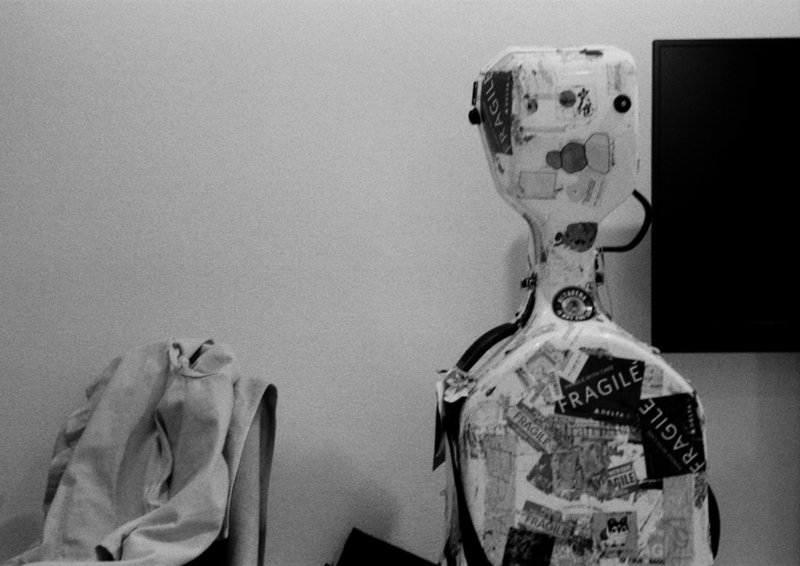
photo by Riona Yamashita (rionanoir), 2026
Topu Lyo (bio)
Topu Lyo is a composer, cellist, and sound artist working between Tokyo and Los Angeles. His practice moves between minimal acoustic performance and experimental composition.
He is one half of the duo Live Footage, whose work spans film scoring, installation, and live performance. His solo work marks a deliberate departure from that collaborative, electronics-rooted practice toward reduction and acoustic focus.
The album “quiet scenes from tokyo” was recorded in Tokyo using solo cello and minimal processing through a Roland 301 Space Echo — run only at the end of the process, tape only. The work explores extended technique as a means of replicating electronic phenomena acoustically: slow portamento, filter sweeps, granular texture, noise. The result is an album that moves between drone, percussion, and abstraction while remaining entirely rooted in the physical instrument.
He is currently based in Tokyo, developing solo performance, installation work, and recordings focused on acoustic minimalism and site-responsive sound.